For over 30 years’ experience
In friction hinge or torque hinge design and manufacturing, our modular automatic production process allows us to achieve high quality production efficiency at a competitive cost.
LEECO’s torque inserts are precision-engineered components designed to provide consistent, controlled resistance in rotating applications. Ideal for access panels, knobs, lids, and other moving parts, these inserts deliver reliable torque without the need for additional mechanisms. Manufactured with durable materials and compact dimensions, torque inserts ensure smooth, repeatable motion and long-term performance. Suitable for industrial, automotive, medical, and consumer electronics applications, they offer an efficient solution for space-limited designs that require stable positioning and smooth tactile feedback.
Hinge Series Master Specifications Table
LEECO Technologies Corporation
| Product Series | Model Name | Torque Range (Nm) | Outer Diameter (mm) | Cycle Life (Cycles) |
|---|---|---|---|---|
| Torque Insert | TIP14 | 3.2 - 14.4 Nm | 14 mm | > 25,000 |
| Torque Insert | TIP10 | 0.8 - 6.0 Nm | 10 mm | > 25,000 |
| Torque Insert | TIM10 / TIM10A | 0.4 - 2.4 Nm | 10 mm | > 50,000 |
| Constant Torque | CD20A / CD20B | 1.88 - 6.25 Nm | 32.1 mm | > 10,000 |
| (Vertical Configuration) | ||||
| Integrated Torque | QM15 | 1.84 - 7.32 Nm | 15 mm | > 25,000 |
| Integrated Torque | QM12 / A / B | 0.0 - 4.92 Nm | 12.7 mm | > 25,000 |
| Integrated Torque | QM10 / A / B / C | 0.0 - 4.08 Nm | 10 mm | > 25,000 |
| Friction Hinge | QA7 | 0.88 - 3.24 Nm | 7 mm | > 25,000 |
| Friction Hinge | BT7A / BT7B | 0.32 - 1.08 Nm | 7 mm | > 25,000 |
| Friction Hinge | TS10 (Tilt & Swivel) | 0.75 - 2.5 Nm | 10 mm | > 25,000 |
| Integrated Friction | CT10A / B / C | 0.72 - 4.08 Nm | 10 mm | > 25,000 |
| Integrated Friction | QM7A / B / C / D | 0.16 - 1.32 Nm | 7 mm | > 25,000 |
| Self-Closing Friction | LL7A / LL7B | 0.32 - 1.08 Nm | 7 mm | > 25,000 |
| One Way Friction | OW10 | 0.5 - 2.0 Nm | 10 mm | > 50,000 |
| Stainless Steel | QM10S | 0.0 - 6.25 Nm | 10 mm | > 25,000 |
| Stainless Steel | BH10S | 0.38 - 2.50 Nm | 10 mm | > 25,000 |
| Barrel Hinge | BH12 | 2.25 - 5.63 Nm | 12 mm | > 25,000 |
| Barrel Hinge | BH10 | 0.75 - 3.75 Nm | 10 mm | > 25,000 |
| Barrel Hinge | BH8 | 0.38 - 1.00 Nm | 8 mm | > 10,000 |
| Barrel Hinge | BH7 | 0.45 - 0.75 Nm | 7 mm | > 10,000 |
| Barrel Hinge | BH6 | 0.38 - 0.63 Nm | 6 mm | > 10,000 |
| Barrel Hinge | BH5 / BH5A | 0.4 - 0.5 Nm | 5 mm | > 10,000 |
| Barrel Hinge | BH4 / BH4A | 0.085 - 0.176 Nm | 4 mm | > 10,000 |
| Barrel Hinge | BH3 / BH3A | 0.033 - 0.068 Nm | 3 mm | > 10,000 |
| Barrel Hinge | BH2A / BH2B | 0.013 - 0.038 Nm | 2.5 mm | > 10,000 |
| Integrated Barrel | SH10S / SH10L | 0.75 - 6.25 Nm | 10 mm | > 25,000 |
For over 30 years’ experience
In friction hinge or torque hinge design and manufacturing, our modular automatic production process allows us to achieve high quality production efficiency at a competitive cost.
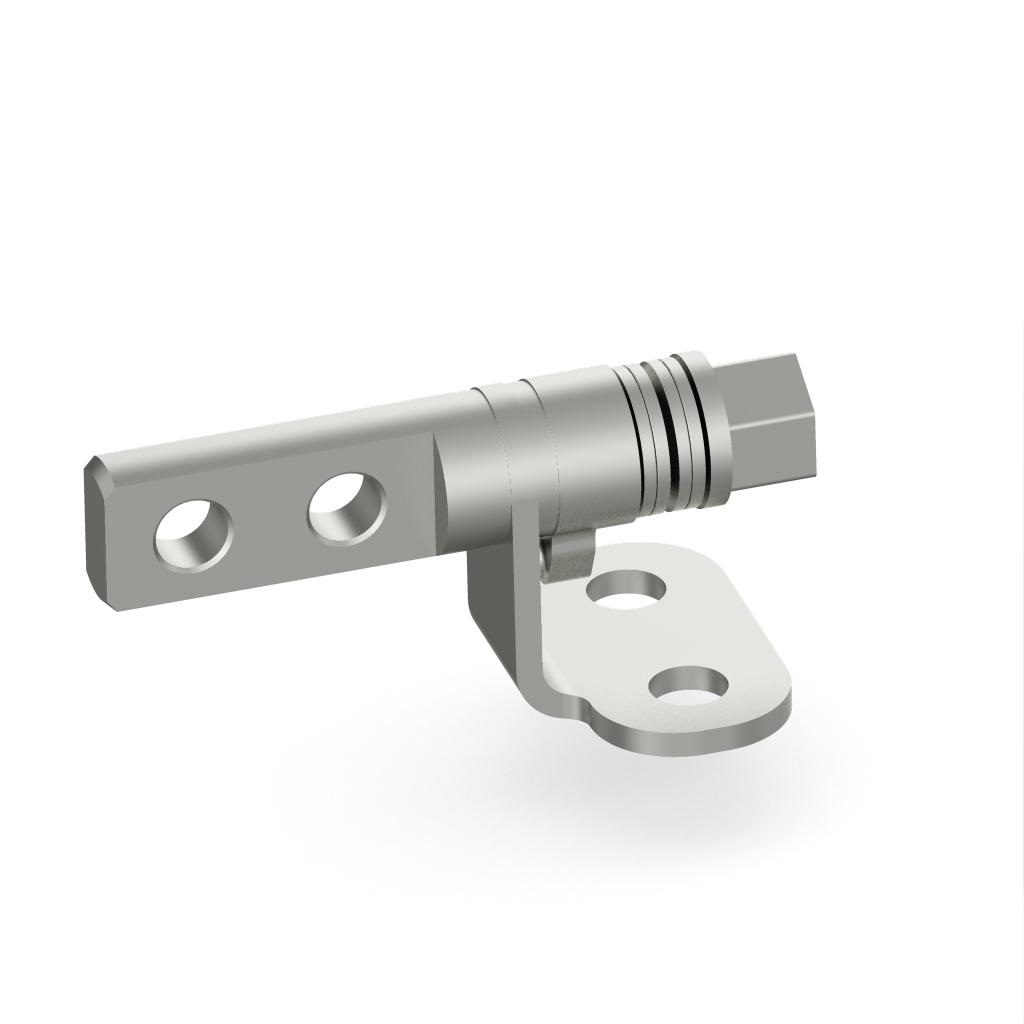
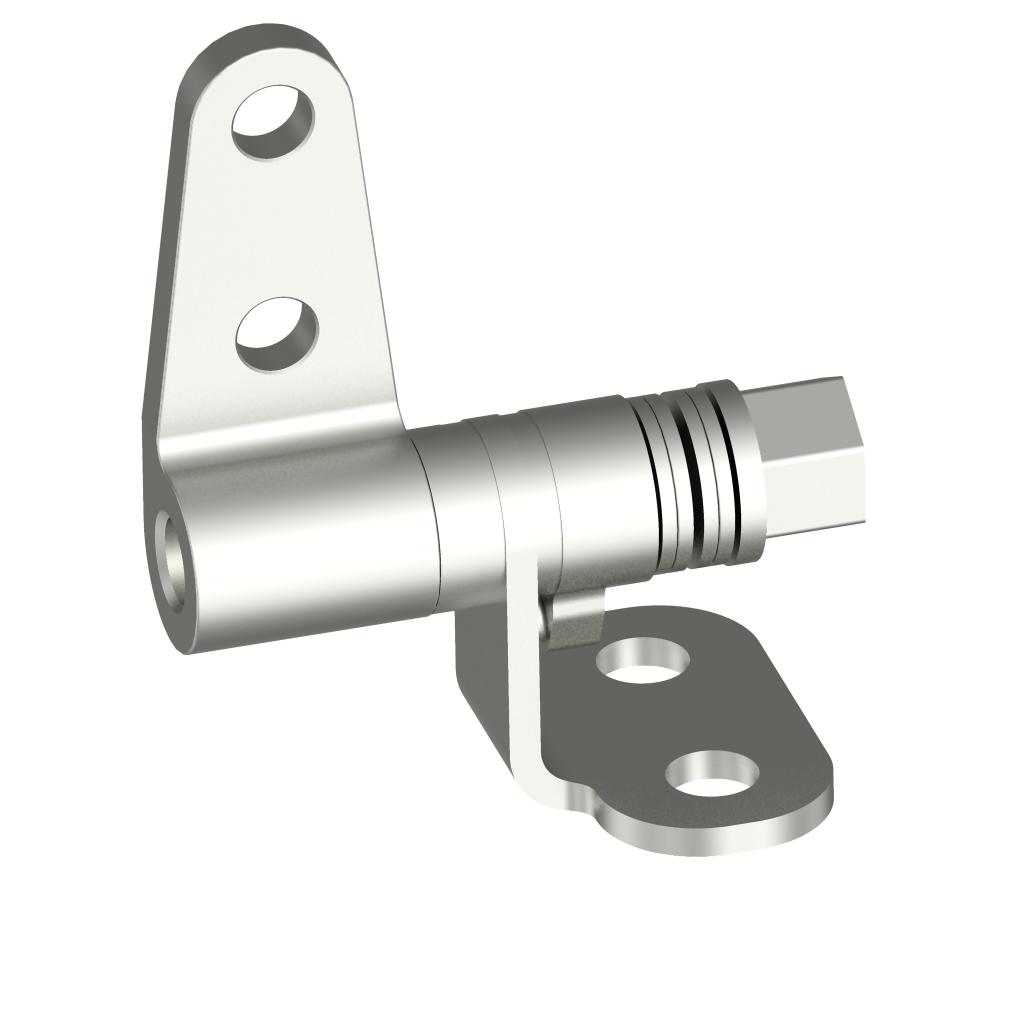
LEECO self-closing hinges are designed to help lids, access panels, and compact doors return smoothly to a closed position after use. By combining controlled torque with compact mechanical design, they provide reliable closing performance without requiring additional springs or external closing mechanisms.
Suitable for industrial equipment, medical devices, automotive interiors, and consumer electronics, LEECO self-closing hinges can be selected or customized based on panel weight, opening angle, available mounting space, and required cycle life.
What Is a Self-Closing Hinge?
A self-closing hinge is designed to help a lid, cover, panel, or access door return toward the closed position after it is opened. Unlike a standard hinge that only allows rotation, a self-closing hinge provides controlled rotational force to support more consistent closing performance.
Self-closing hinges are commonly used when a product requires a compact closing solution without adding separate springs, external closing devices, or additional mechanical components. They can be used in small enclosures, equipment covers, access panels, electronic devices, and other applications where stable closing motion is important.
The actual closing performance depends on the hinge torque, panel weight, center of gravity, opening angle, mounting direction, and number of hinges used in the design.
Why Choose a Self-Closing Hinge?
A self-closing hinge can help simplify mechanical design while improving the usability of lids, covers, and access panels. By integrating controlled torque into the hinge mechanism, it can support smoother movement and more reliable closing performance in compact product designs.
Controlled Closing Motion
The hinge provides rotational resistance and closing assistance to help reduce uncontrolled movement. This can be useful for covers and panels that should not swing freely or remain open unintentionally.
Compact Mechanical Integration
A self-closing hinge can reduce the need for separate springs, dampers, or external closing devices. This makes it suitable for products with limited installation space or simplified mechanical requirements.
Improved Product Usability
For equipment covers, access panels, and small lids, automatic closing support can help improve the overall user experience by making product operation more intuitive and consistent.
Repeatable Long-Term Performance
When selected correctly for the panel weight and application requirements, a self-closing hinge can provide stable and repeatable movement throughout the expected product life cycle.
How Does a Self-Closing Hinge Work?
A self-closing hinge works by using a controlled torque mechanism to create rotational resistance and return force during movement. As the lid, cover, or panel is opened, the hinge applies resistance throughout the rotation. When the panel is released, the hinge helps guide it back toward the closed position.
The required torque level should be selected according to the product structure and motion requirements. A hinge with insufficient torque may not provide enough closing assistance, while excessive torque may create unnecessary operating force or cause the panel to close too quickly.
To select the right self-closing hinge, engineers should consider:
- Panel weight
- Center of gravity
- Opening angle
- Mounting orientation
- Number of hinges used
- Available installation space
- Desired closing speed and force
- Expected operating cycles
LL7 Self-Closing Hinge Specifications
LEECO Technologies Corporation
| Product Series | Model Name | Torque Range (Nm) | Outer Diameter (mm) | Cycle Life (Cycles) |
|---|---|---|---|---|
| Self-Closing Friction Hinge | LL7A | 0.32 - 1.08 Nm | 7 mm | > 25K |
| Self-Closing Friction Hinge | LL7B | 0.32 - 1.08 Nm | 7 mm | > 25K |